Visit Network
A network of destination travel sites running on one shared publishing and booking platform.
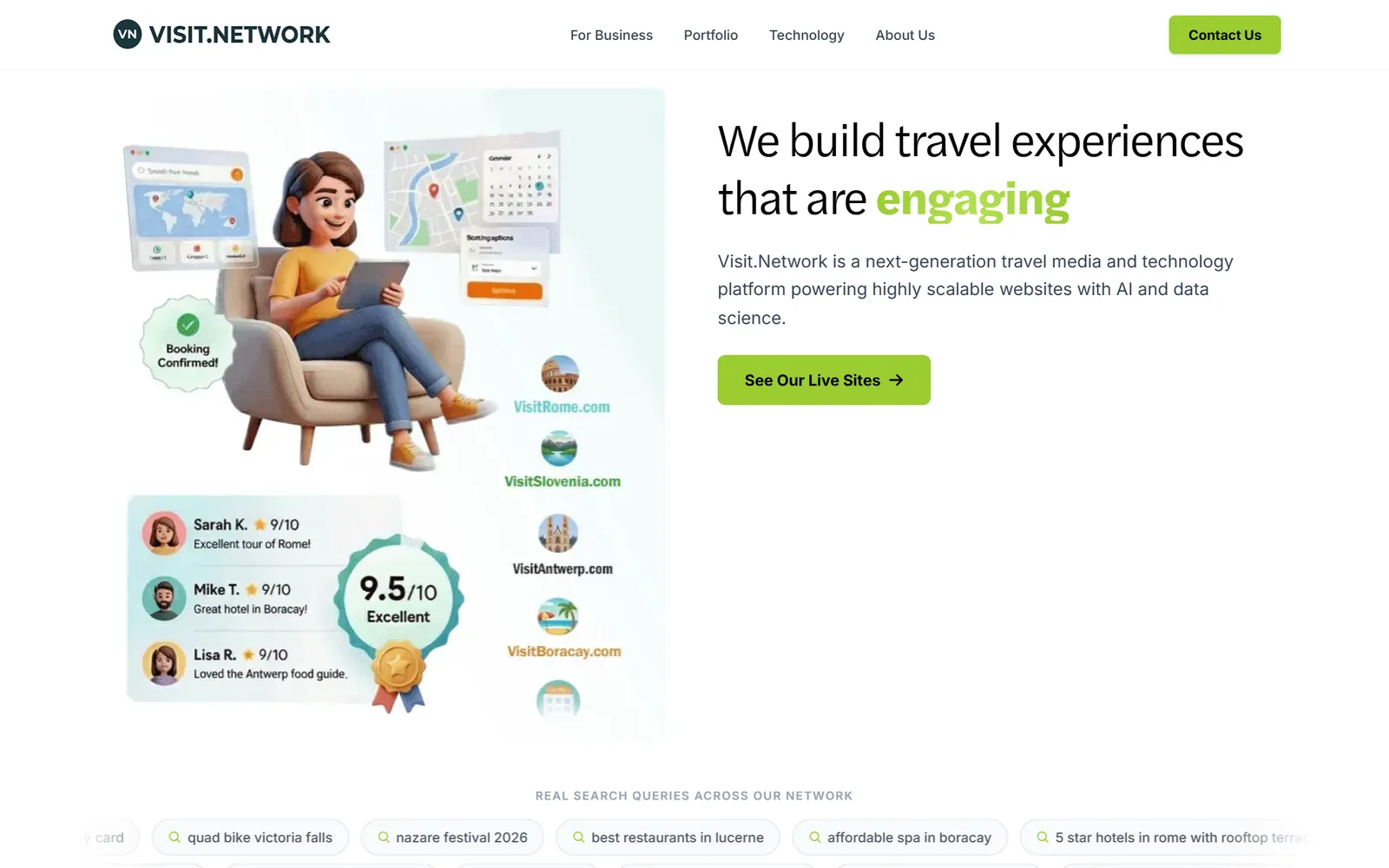
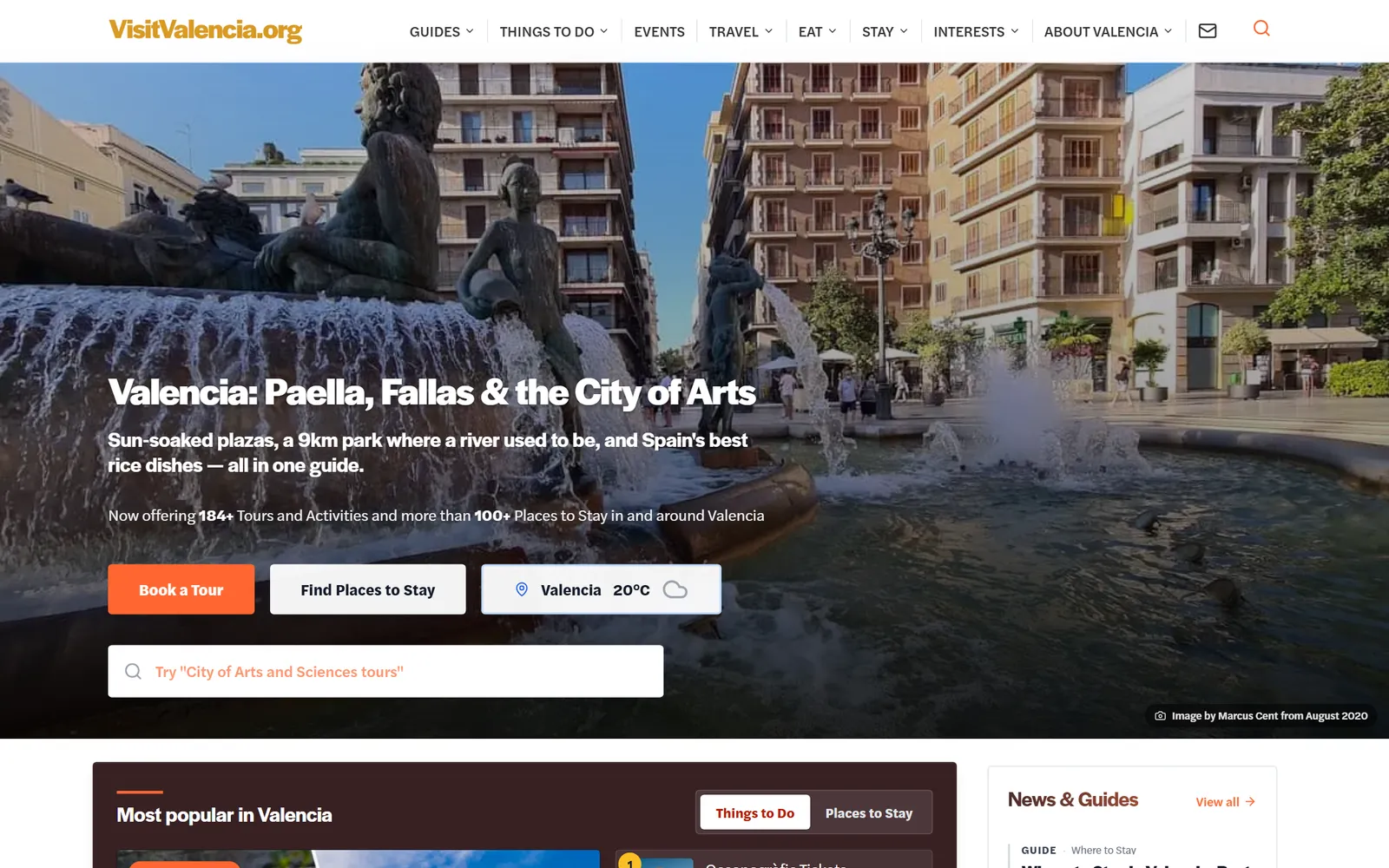
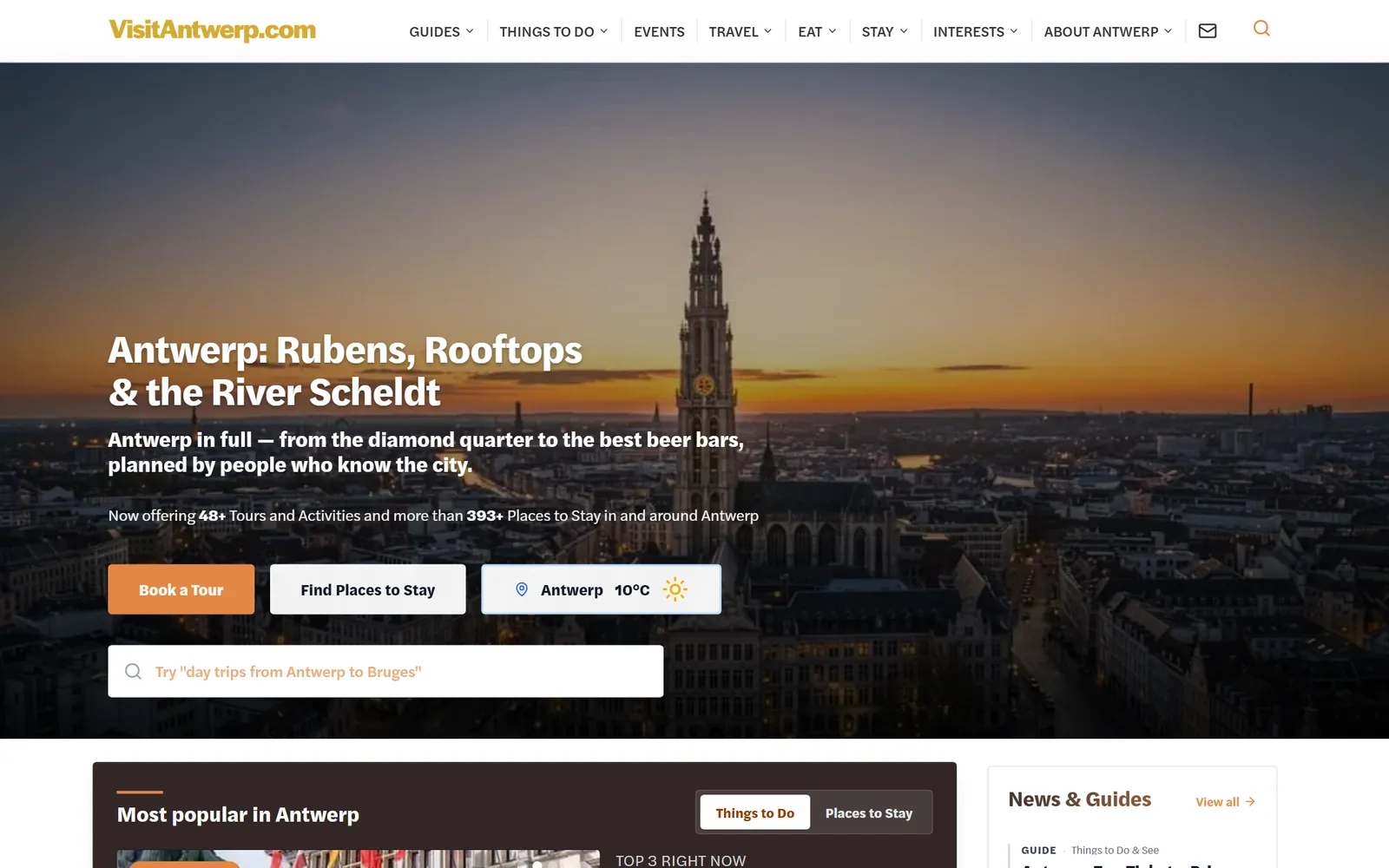
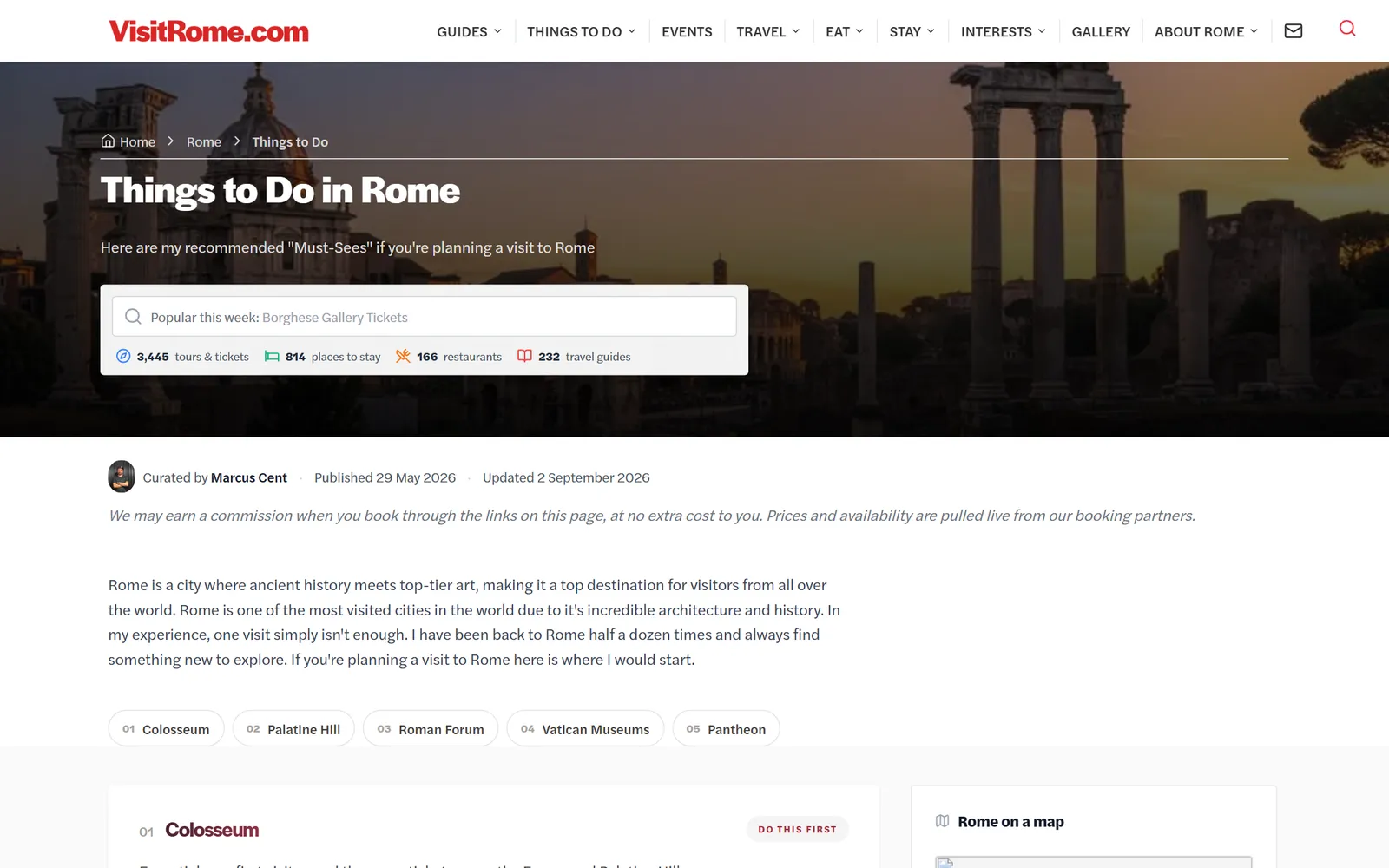
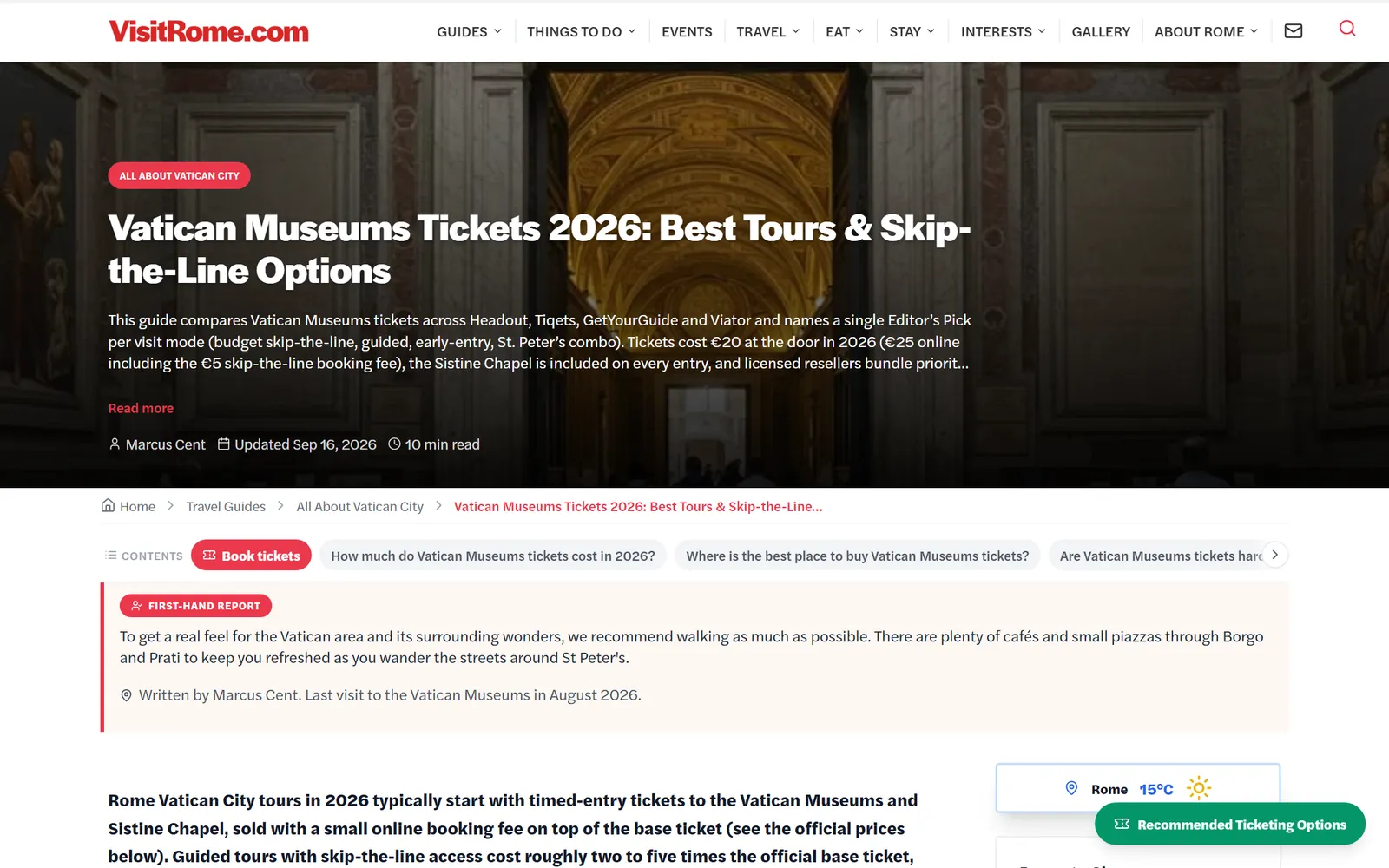
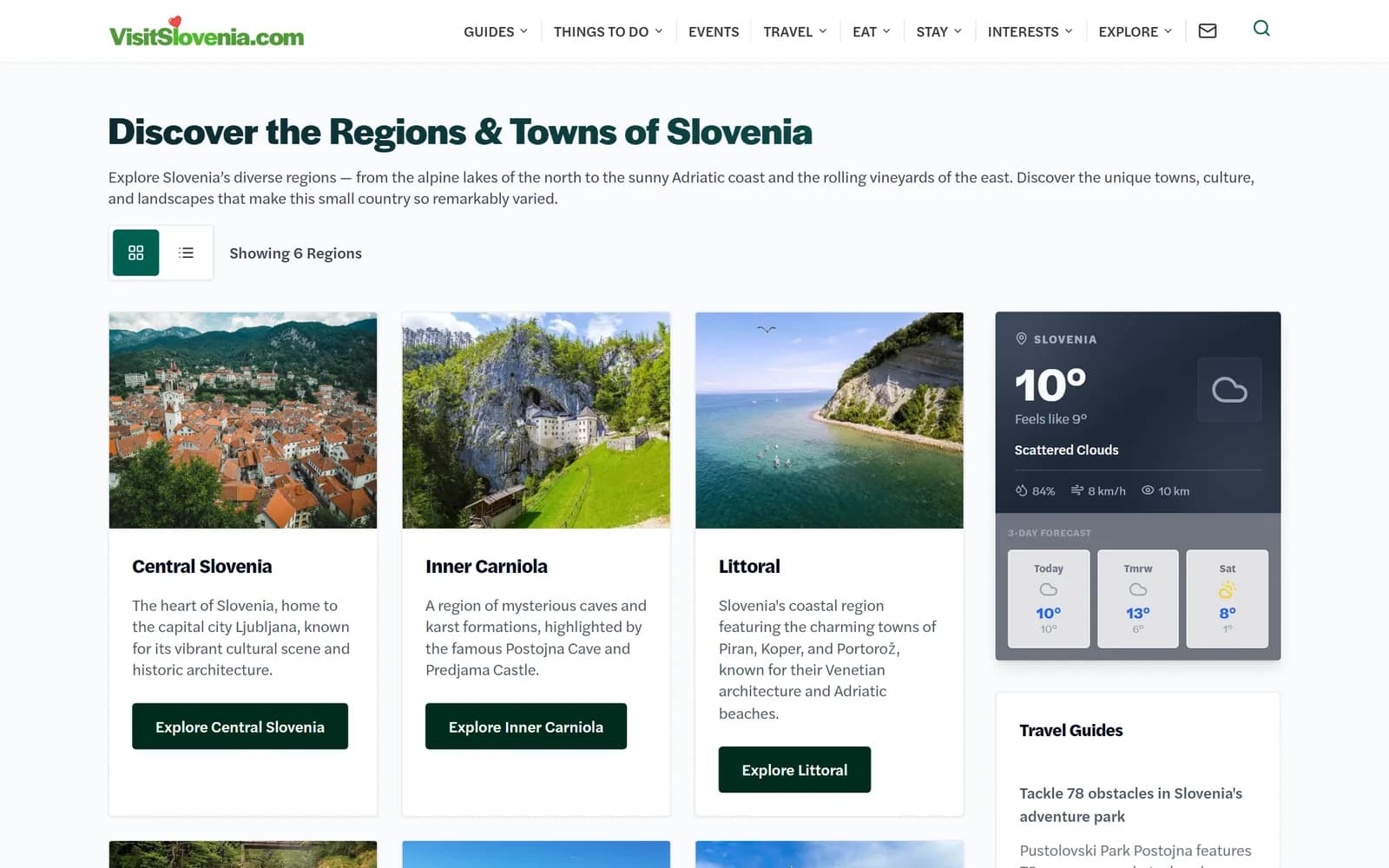
Visit Network publishes travel guides for cities, regions and countries, including Visit Rome, Visit Slovenia, Visit Lucerne, Visit Antwerp, Visit Valencia and Visit Boracay. Each site has its own brand, content and local character, but all of them run on one shared platform. Travellers use the sites to decide what to see, where to stay and how to get around. The network earns commission when visitors book tours, tickets and hotels through partners such as Viator, GetYourGuide, Tiqets, Headout, Booking.com and Expedia, at no extra cost to them.
- Stage
- Commercial rollout
- Sector
- Travel & Publishing
- Performous role
- Owner. Concept and platform
- Website
- visit.network
- Where it stands
- More than 20 destination sites are live, each with affiliate booking links. Further destinations are being prepared on the same platform.
Why it needed to exist
Building and maintaining a single high quality travel site is expensive. Building twenty separately means paying for the same features, integrations and fixes twenty times, and most independent sites never reach the depth that search engines and travellers reward.
A shared platform changes the economics. Guides, partner inventory, booking links, image handling and search tooling are developed once and used everywhere, so launching a new destination becomes mainly a matter of a domain and good content.
The product, as it works today
One platform, many destinations
The platform recognises each domain and serves that destination's colours, fonts, content and features. Adding a destination is a configuration step, not a new website.
Destination structure
Countries, regions, cities, neighbourhoods and landmarks follow a consistent hierarchy, so every site has deep, well linked guides.
Tours, tickets and hotels
Importers bring in tours, activities and accommodation from partner catalogues, with live availability where partners provide it and several sellers compared for the same attraction.
Tracked booking links
Every outbound booking passes through one tracked redirect, which records the click and the partner and supports commission reporting across the network.
Editorial workflow
Tools for articles, guides and lists help editors research and draft content, with images, image descriptions and internal links generated and checked automatically.
Search and site health
Search Console data, indexing checks, page speed monitoring, internal link audits and more than 70 scheduled jobs keep every site healthy without manual checking.
What each part is for
- Shared platform
- Development cost is spread across the whole network, and every improvement reaches every destination at once.
- Fast destination launches
- A new site needs a domain, a configuration and content, not a development project.
- Partner inventory
- Bookable tours and hotels give each site practical value for travellers and a route to revenue from day one.
- Tracked booking links
- Creates commission income from bookings and shows which partners and pages perform best.
- Editorial automation
- Lets a small team publish and maintain depth across many destinations that would otherwise need a newsroom.
- Automated monitoring
- Problems with speed, indexing or links are caught across the network before they cost traffic.
How it was built
How AI helped build it
The platform has been developed continuously with AI coding tools, through more than 5,000 changes to date. It runs on dedicated cloud servers behind Cloudflare, and the same codebase also powers the MagiPort portal engine.
AI inside the product
- The editorial team uses AI to research and draft articles, create images and write image descriptions, with people reviewing what is published.
Integrations
- Viator
- GetYourGuide
- Tiqets
- Headout
- Booking.com
- Expedia
- Agoda
- Google Search Console
- Cloudflare
- Supabase
Have an idea, or a business that could run better?
We're always glad to talk about new ventures, investment ideas, technology, or how an existing business could operate more efficiently.